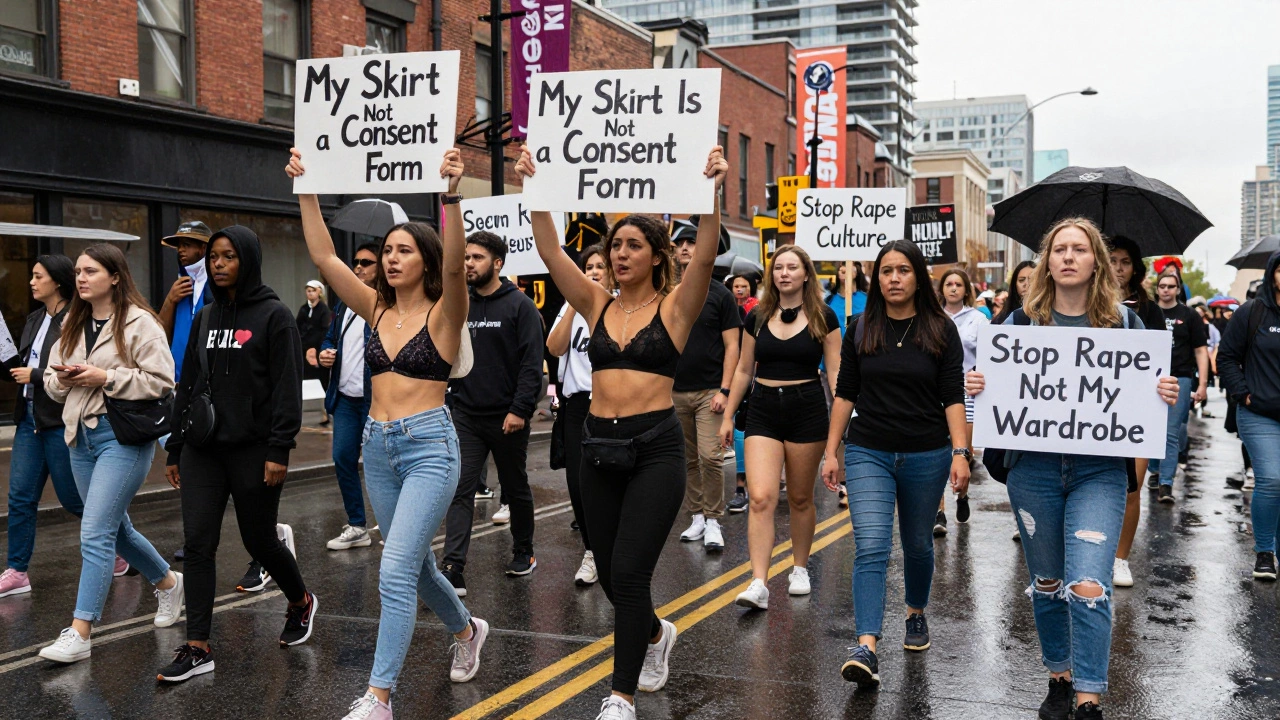
In 2011, a Toronto police officer made a comment that sparked a global movement: women should avoid dressing like 'sluts' if they didn’t want to be sexually assaulted. The remark wasn’t an outlier-it echoed a pattern of blaming victims instead of holding perpetrators accountable. Within days, a small group of women in Toronto organized a protest. They called it Slutwalk. No fancy banners. No polished speeches. Just women walking the streets, wearing what they wanted, chanting, 'What do we want? Justice. When do we want it? Now.' And they weren’t alone. Within months, Slutwalks popped up in over 200 cities-from London to Lima, from Sydney to Santiago. The word 'slut' was no longer a weapon to silence women. It became a banner they reclaimed.
It’s easy to dismiss the term as crude, but the point wasn’t to glorify the word. It was to expose how language is used to control. The same logic that tells women to cover up to avoid assault is the same logic that sells escort paris euro as if consent is optional and dignity is a price tag. The connection isn’t obvious until you see it: both reduce women to objects defined by their appearance or sexual behavior. Slutwalk flipped that script. It said: your clothes don’t ask for it. Your body doesn’t owe anyone anything. And if you’re called a slut for walking home at night? You march.
Where It All Started
The spark came from a talk given by Constable Michael Sanguinetti at York University. He told a group of first-year students that women could avoid sexual assault by not dressing like 'sluts.' The audience was stunned. One student, Heather Jarvis, posted about it online. Another, Brenda Cossman, a law professor, helped turn the outrage into action. They created a Facebook event: 'SlutWalk Toronto.' The response was immediate. Thousands showed up-not just women, but men, non-binary folks, parents, teachers. Some wore lingerie. Others wore jeans and hoodies. All carried signs: 'My Skirt Is Not a Consent Form,' 'Stop Rape Culture, Not My Wardrobe.'
The march wasn’t about fashion. It was about autonomy. It was about rejecting the idea that a woman’s value, safety, or credibility hinges on how she looks. The police officer’s comment wasn’t just wrong-it was dangerous. It reinforced the myth that sexual violence is provoked, not chosen by the perpetrator. Slutwalk challenged that directly.
How the Movement Spread
Within weeks, Slutwalks were happening in Canada, the U.S., Europe, and beyond. In Buenos Aires, women marched in high heels and skirts, holding signs that read, 'I’m Not Asking for It-I’m Asking for Justice.' In Tokyo, participants wore school uniforms to protest how Japanese media often blames victims of sexual crimes. In Berlin, a group of transgender women joined, reminding everyone that slut-shaming doesn’t just target cis women-it hits anyone who defies gender norms.
The movement didn’t need a central leader or a corporate sponsor. It thrived because it was personal. Each march was organized by locals who had been told to be quiet, to cover up, to not make a scene. They didn’t wait for permission. They just showed up. And they brought their mothers, their daughters, their friends who’d been raped and never spoken about it. The marches weren’t silent. They were loud. They were messy. They were real.
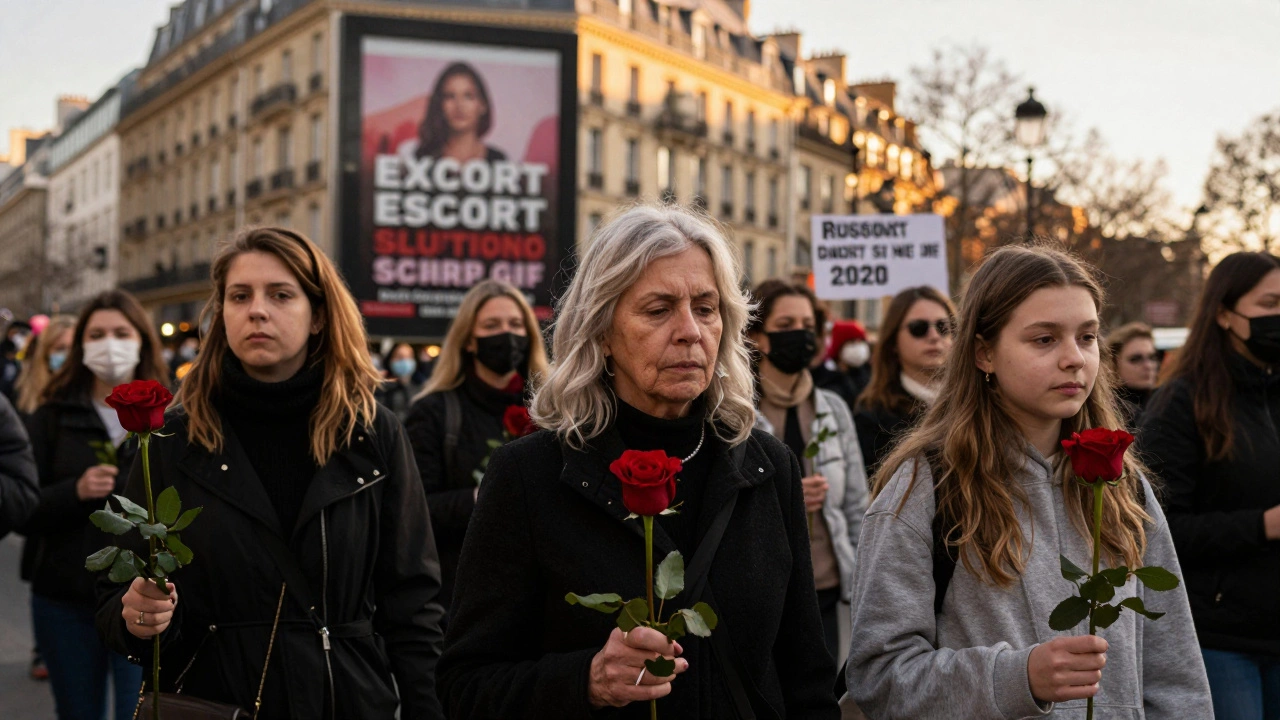
One of the most powerful moments came in 2012, when a group of women in Paris marched with signs in French and English. One read: 'Je ne suis pas une escrote paris.' It was a deliberate twist on the word 'escort,' flipping the script on how women’s sexuality is commodified. The phrase wasn’t just a protest-it was a declaration. You can call me names. You can try to sell me. But I am not what you say I am.
Why the Word 'Slut' Matters
Reclaiming slurs isn’t new. Queer communities have done it for decades. Black activists reclaimed 'nigger.' LGBTQ+ people turned 'queer' from an insult into a badge of pride. Slutwalk did the same for 'slut.' But it wasn’t about making the word acceptable-it was about stripping it of its power to shame.
Studies show that women who are labeled 'sluts' are less likely to be believed when they report assault. A 2013 study from the University of California found that participants were 40% less likely to hold a man responsible for rape if the woman was described as 'slutty.' That’s not coincidence. That’s systemic. Slutwalk forced people to confront that reality. It wasn’t about defending promiscuity. It was about defending the right to exist without judgment.
And it worked. Police departments started revising training. Universities added consent education. Media outlets stopped using 'slut' as shorthand for a victim’s character. The word still gets thrown around, but now, when it does, people pause. They remember the marches. They remember the signs. They remember the women who refused to be silent.
The Backlash and the Misunderstandings
Of course, not everyone got it. Critics called Slutwalk 'anti-family,' 'promoting promiscuity,' or 'a joke.' Some said it was 'divisive.' Others claimed it was 'anti-male.' But those criticisms missed the point entirely. Slutwalk didn’t target men. It targeted the systems that excuse violence. It didn’t say all men are predators. It said: stop making excuses for them.
Even within feminist circles, there was debate. Some argued that reclaiming 'slut' reinforced the very stigma it sought to destroy. Others worried it distracted from deeper issues like poverty, racism, and transphobia. Those concerns weren’t invalid-but they also weren’t the point. Slutwalk wasn’t meant to solve everything. It was meant to start a conversation. And it did.
One of the most overlooked victories was how Slutwalk made space for intersectionality. Black women, Indigenous women, disabled women, sex workers-they weren’t just invited to the march. They led it. In Toronto, a group of Indigenous women carried a drum and sang traditional songs as they walked. In New York, a group of sex workers held signs that read: 'I’m Not a Victim-I’m a Worker.' Slutwalk didn’t pretend all women had the same experience. It made room for all of them.
What Slutwalk Changed
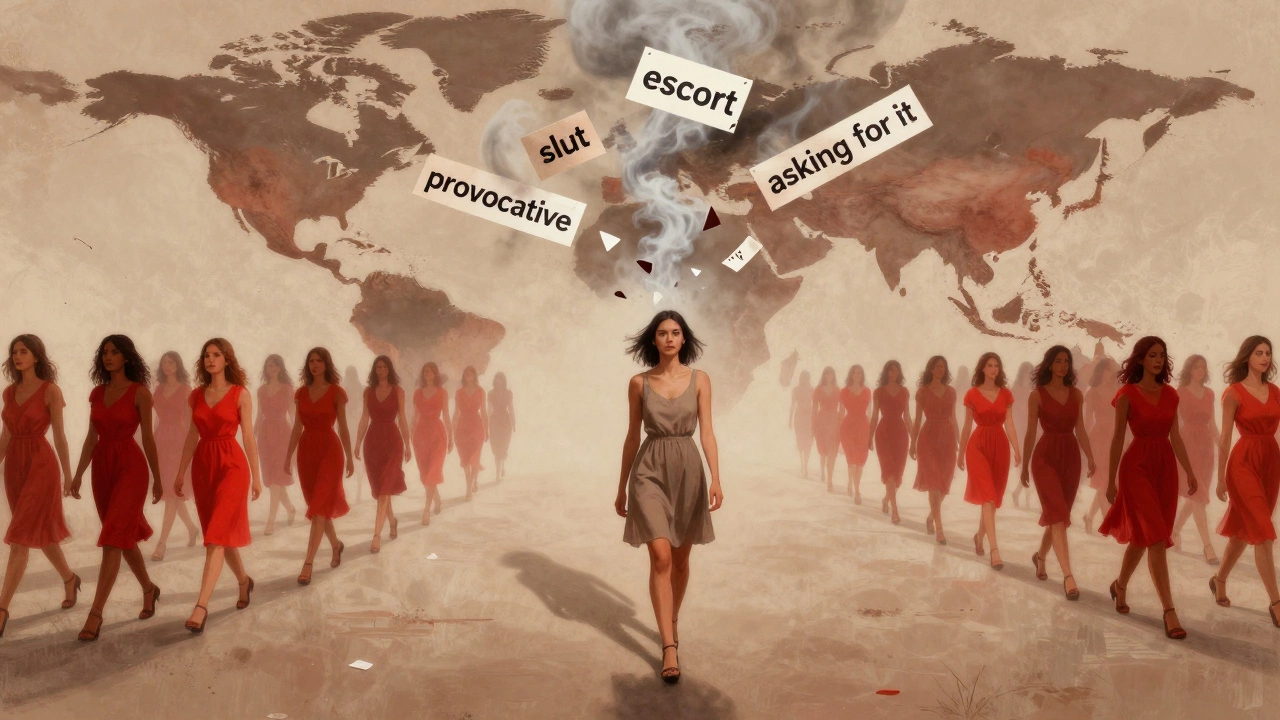
It’s hard to measure the impact of a movement that doesn’t have a policy win or a law passed. But change doesn’t always come from legislation. Sometimes, it comes from a shift in how people think.
Today, when a woman is assaulted, more people ask: 'Why did he do it?' instead of 'What was she wearing?' Schools teach consent before teens start dating. Colleges have mandatory bystander training. Even pop culture is changing-TV shows now show survivors being believed, not doubted.
And the word 'slut'? It still hurts. But now, when someone uses it, more people push back. Not with anger, but with clarity. 'That’s not okay.' 'That’s not who she is.' 'She didn’t ask for this.'
Slutwalk didn’t end. It evolved. In 2020, during the pandemic, women in Melbourne held a silent march-each carrying a single red rose. No megaphones. No chants. Just presence. One woman, 72, walked with her granddaughter. 'I thought I’d never see this in my lifetime,' she said. 'But now I know my granddaughter won’t have to live the way I did.'
What It Means Today
Slutwalk isn’t just about clothing or assault. It’s about who gets to define a woman’s worth. Is it her job? Her relationship status? Her body? Her sexuality? Or is it her humanity?
Today, when you see a woman walking alone at night in a miniskirt, in sweatpants, in a hijab, in a business suit-you don’t assume anything. You don’t wonder if she’s asking for trouble. You just hope she gets home safe.
And if someone tries to shame her? You don’t stay quiet. You remember the marches. You remember the signs. You remember that a slut by any other name would still march the same.
That’s the legacy. Not a statute. Not a hashtag. A shift in how we see each other.
And somewhere in Paris, a woman walks past a billboard advertising an escort parie, and she doesn’t flinch. She knows the difference between choice and coercion. She knows the difference between a label and a life. And she keeps walking.